Service standards
The standards we are held to.
Signal Frame has no logo wall yet. What we have instead is a set of numbers we publish before you book, a stated method for measuring each of them, and a remedy if we miss one. Every proposal we send carries this page by reference.
What we commit to
Four numbers, and how each one is measured.
These are the same figures that appear on the homepage. Measurement method matters more than the figure — a number without a method is a slogan.
| Standard | How it is measured | If we miss it |
|---|---|---|
| Under 60 seconds, pose to portrait | Timed from shutter to the delivery message leaving our system, logged per session and reported as a median across the activation. | If the median exceeds 60 seconds, 10% of the fee is credited. |
| 45–60 guests an hour, one station | Completed sessions per hour while a queue is present. Hours with no queue are excluded — we cannot manufacture demand. | If throughput falls below 45 with a queue standing, the shortfall hour is not charged. |
| 98% station uptime | Minutes the station was able to accept a guest, over the contracted hours. Venue-caused outages we warned about in writing are excluded. | Below 98%, the downtime is credited at double the pro-rata hourly rate. |
| 48 hours to gallery, leads and report | From the end of load-out to all three being in your hands. Not from your reminder. | Past 48 hours, 15% of the fee is credited, without you having to ask. |
Credits are applied to the final invoice, or refunded if the invoice is already settled. We calculate them ourselves from the activation log and tell you — chasing a supplier for a credit they already owe you is not a good use of your afternoon.
Style testing
Every style is tested on more than thirty faces before your event.
Image models fail unevenly. They lighten skin, straighten hair, remove or reshape head coverings, and struggle with glasses. None of that is acceptable at an event where a guest is looking at a picture of themselves in front of colleagues. So we test for it, on purpose, before you ever see the style.
A minimum of thirty reference portraits per style
Spanning the full range of skin tones, hair textures and hair styles, facial hair, glasses, and religious or cultural head coverings. Not a demonstration set of six agreeable faces.
Four specific failure modes, checked every time
Skin tone shifted lighter or darker. Hair texture altered. A head covering removed, reshaped or recoloured. Glasses deleted or warped. Any one of these fails the style and it goes back.
Recognisability is the pass condition
The test is not whether the portrait is attractive. It is whether the person is unmistakably themselves. A flattering picture of someone else is the worst outcome this service can produce.
Heritage styles carry an additional review
Any style drawing on a cultural tradition is reviewed by someone from that community before a guest sees it, and traditions are never blended into one composite look.
The test set is kept for each style and can be shown to you during the proposal stage. If a style cannot pass, we tell you it cannot pass rather than shipping it and hoping.
What we bring in case something fails.
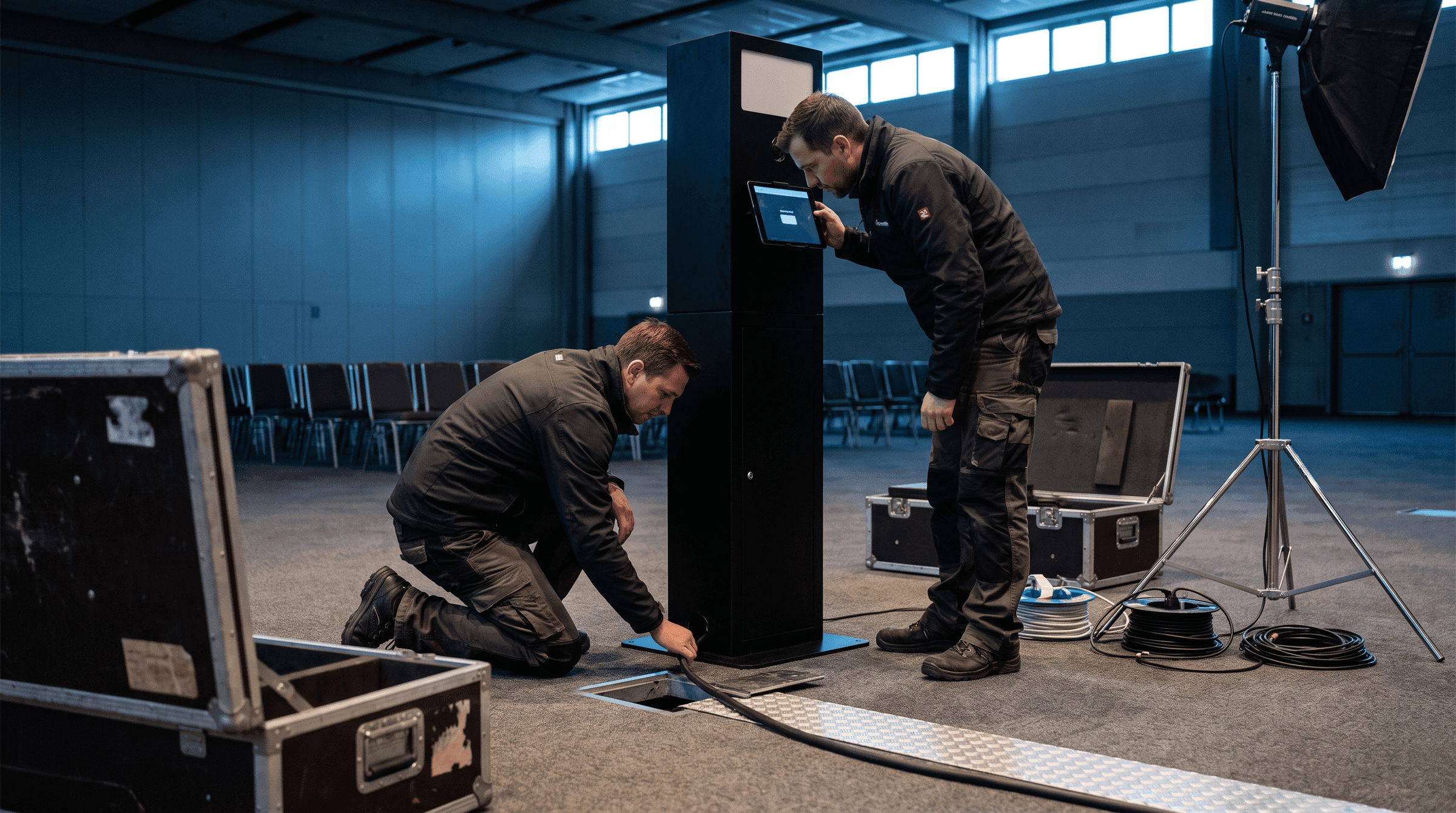
Every item here exists because the thing it protects against has happened to someone running an event in this country.
- Power
- A battery sized for the full shift including the printer, carried to every activation whether or not the venue promises clean power.
- Connectivity
- Two connections on different carriers, failing over automatically. Venue Wi-Fi is never the plan.
- Capture
- A second camera body and lens in the case. A failed body costs us minutes, not the activation.
- Crew
- A named host and a named backup for every booking. If the host cannot make it, the backup is already briefed on your styles.
- Delivery
- If both networks drop, the station keeps photographing and queues delivery. Guests are told, and every queued portrait sends when the line returns.
- Bump-in
- On site and built at least 90 minutes before doors, with a full test pass through the station before the first guest.
What we need from you
Six things, and none of them on the day.
Every one of these is a thing that, missing, turns a good activation into an average one. We ask for all of them at briefing, not at bump-in.
- 01A 3m × 3m floor area with a solid wall or space for our backdrop, agreed with the venue in writing.
- 02Access for bump-in at least two hours before doors, and a loading route we can wheel a case along.
- 03Brand assets — logo in vector, campaign colours, and any typeface licence we need to use.
- 04The look you are after, three to four weeks out, so styles can be built and tested rather than improvised.
- 05Your privacy notice, and confirmation of who the responsible party is for the guest data we capture.
- 06A named contact who will be on site and can make a decision without a phone call to head office.
Hold us to this.
If a standard on this page is not one you can put in front of your own client, tell us which and why. We would rather redraft it before a contract than argue about it after an event.
Guest data is covered separately. Read how consent and retention work.